2026-02-16
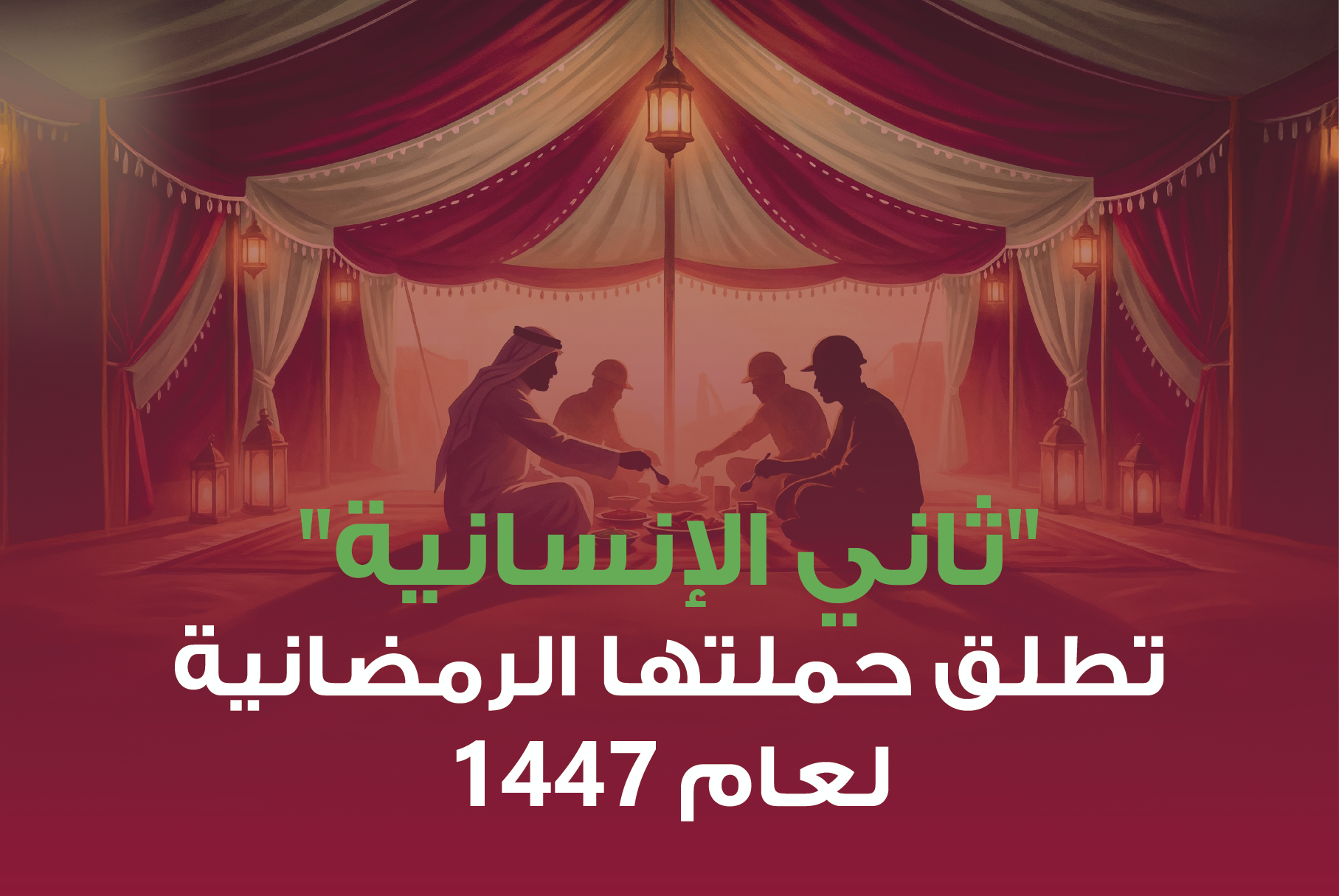
The Thani Bin Abdullah Foundation for Humanitarian Services announced its Ramadan campaign for 1447 AH, which includes a range of projects, most notably the Iftar (breaking the fast) project, distributed across five regions of the country and aiming to reach approximately 65,000 fasting individuals throughout the holy month. The campaign also includes several ongoing projects during Ramadan, such as the Sanabel Al-Khair (Ears of Goodness) project, which focuses on assisting patients.Additionally, the campaign includes the Ata’ Al-Khair (Giving of Goodness) project, which aims to collect in-kind donations and deliver them to beneficiaries, and the Kafeel Yatim (Sponsorship of an Orphan) project, which works to provide comprehensive support and care for orphans.Dr. Ayed bin Dabsan Al-Qahtani, CEO of the Thani Bin Abdullah Foundation for Humanitarian Services, emphasized that the blessed month of Ramadan represents a central annual milestone in the Foundation's work plan, given its profound meanings and noble humanitarian values that embody the spirit of solidarity and compassion and strengthen the presence of sustainable institutional charitable work. He added: “During Ramadan, the Foundation is keen to expand its humanitarian and social programs to meet the needs of the most vulnerable groups and keep pace with the requirements of the holy month, stemming from its mission to serve humanity and preserve human dignity, and in line with the State of Qatar’s vision for humanitarian work and sustainable development.”Dr. Al-Qahtani explained that the Iftar (breaking the fast) programs represent one of the most prominent aspects of Ramadan work. The Foundation works to provide Iftar meals to needy families, workers, and expatriate communities through organized mechanisms that ensure access to those who deserve it, thus achieving a direct impact during the holy month and alleviating their living burdens.Regarding social welfare, the CEO indicated that the orphan sponsorship and support programs for needy families continue during Ramadan at an increasing pace. The Foundation strives to provide financial and psychological stability for orphans and ensure the sustainability of educational and social support for them, contributing to building a better future for them.Dr. Al-Qahtani emphasized that the Foundation is committed to providing the necessary support to the families of the most vulnerable and to supporting them in a sustainable manner. Ayed Al-Qahtani stated that the foundation gives special attention to Quranic and educational projects during Ramadan, most notably the "Tibyan" project, which aims to print and distribute the Holy Quran and its translations in several languages to serve non-Arabic speaking communities and widely disseminate the meanings of the Holy Quran, thereby strengthening religious awareness and Islamic identity.He also noted the continuation of educational and knowledge programs, including initiatives aimed at supporting and empowering students academically, based on the belief that education is a fundamental pillar of sustainable development.Within the broader humanitarian framework, he explained that the foundation implements several social and health initiatives during Ramadan, including the "Sanabel Al-Khair" project, which focuses on supporting patients and alleviating their healthcare burdens, in cooperation with relevant authorities and through mechanisms that ensure transparency and the efficient allocation of resources.He said, "At the Thani Bin Abdullah Foundation for Humanitarian Services, we believe that giving during Ramadan is not merely a seasonal act, but rather an extension of a sustainable humanitarian approach that prioritizes human well-being and works to build more cohesive and compassionate societies." Dr. Ayed bin Dabsan Al-Qahtani concluded his statement by emphasizing that the humanitarian impact achieved by the foundation during Ramadan is a result of the integrated efforts between the foundation and its partners, including donors and supporting entities. He called for continued support for institutional charitable work, given its profound impact on the lives of individuals and communities.======================= Mr. Ibrahim Ali Abdullah, Director of the Sha'irat Khair Project, confirmed that the Thani Bin Abdullah Foundation for Humanitarian Services is implementing the Iftar (breaking the fast) project during the holy month of Ramadan 1447 in several areas, including Al-Gharafa and within workers' accommodations in several densely populated worker areas such as Al-Rayes, Al-Mazrouah, the Central Market, and the Workers' City. This initiative is part of the seasonal plan to strengthen social solidarity and expand access to those in need.He explained that the Iftar project aims to provide meals for 2,100 fasting individuals daily, totaling approximately 65,000 beneficiaries throughout the holy month. This is achieved through a comprehensive operational system that ensures organizational discipline, adherence to health regulations, and the quality of meal preparation and distribution. This reflects the organization's commitment to providing a humanitarian service that preserves the dignity of its beneficiaries.He noted that the project specifically targets laborers, drivers, and low-income individuals at their locations, facilitating access to support at Iftar time and alleviating the burden of travel, especially during peak hours.He also pointed out that the work teams and volunteers continue their daily field efforts to ensure the smooth distribution and precise implementation, according to a well-planned operational strategy covering all days of the blessed month.Mr. Ibrahim Ali Abdullah called upon philanthropists and benefactors to seize the opportunity of this holy month and contribute to supporting the project. He emphasized that providing Iftar for those fasting is one of the greatest acts of reward, in accordance with the Prophet's saying (peace and blessings be upon him): "Whoever provides Iftar for a fasting person will have a reward like theirs, without diminishing anything from the reward of the fasting person." He noted that the implementation of the Iftar project for fasting people in 1447 AH comes as an extension of the foundation's approach to instilling the values of giving and strengthening social responsibility initiatives, thus contributing to achieving a tangible humanitarian impact within the country.============== Dr. Mohammed Al-Janahi, Director of the Sanabel Al-Khair Project, said: “The project is in its establishment phase, and the Thani Bin Abdullah Foundation for Humanitarian Services will sign a memorandum of understanding with one of the leading medical institutions to provide support and assistance to those in need of treatment who are unable to complete their treatment journey. This is the primary objective of the foundation's project.”He added: “Ramadan is the month of giving and multiplied rewards, and this is a precious opportunity to spend in charitable and giving ways, including treating the sick and needy. Those who spend in this way will receive a great reward, God willing. This blessed month represents an opportunity to contribute to the treatment of patients and support their families.”Dr. Mohammed Al-Janahi continued: “During the blessed month of Ramadan, we will strive to raise awareness about the Sanabel Al-Khair Project, which is one of the distinguished projects that we expect to receive interaction from the Qatari community and a positive response from its people.”